Call Now For Free Estimate! 0521405744


Larch wood is highly durable. In terms of strength, it even outstrips oak - 96 MPa against 94 MPa. Moreover, due to the special composition of the resin, larch only gains strength over time.
Larch is one of the few wood materials that benefit from contact with water (from hardwoods, oak has the same property)
Larch is considered an elite species: in terms of aesthetics, larch wood is on a par with oak and ash wood, differing from them in color towards a sunnier range.

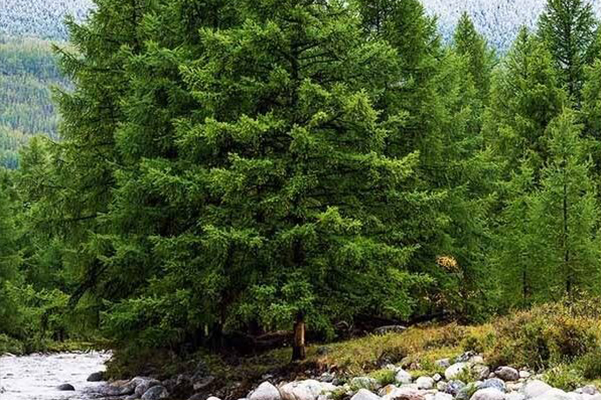
Siberian Larch (larix Sibirica) is the forest's queen. It lasts longer than pine, cedar, or linden. Buildings constructed from it last for decades. It grows in forest, forest-tundra, and forest-steppe zones. Natural distribution area: Eastern Siberia, Eastern Kazakhstan, northern Mongolia and Northwestern China. SiberianLarch has long been a sought-after material all over the world. The most important elements were made from it - the supporting structures of the roof, the first crowns of houses, window frames. Exceptional performance has influenced its use in shipbuilding. Furthermore, Siberian larch was used for these purposes. The natural gum present in larch wood gives it exceptional moisture resistance and protects it from insect damage. The unique resin that permeates its fibers makes larch inherently resistant to insects and allows it to be used without chemical treatments, even in environments where other wood species are prone to rot. As a result, larch has been a preferred material for durable construction, with buildings made of larch standing for centuries. Notably, Venice is built on larch stilts because concrete cannot endure the corrosive effects of seawater. Similarly, Siberian Larch was used in the foundations of 15th-18th century homes in Amsterdam, a city renowned for its canals and bridges. Siberian Larch piles, driven into canal beds, provided a foundation that could withstand water exposure for up to a thousand years. Larch has also played a significant role in shipbuilding, where only certain tropical hardwoods rival its durability. Its resistance extends to rodents and wood-boring insects, further enhancing its versatility. Aesthetically, larch wood is prized for its rich and varied color palette, ranging from light yellow to orange and golden brown, with up to 12 warm-toned shades. Its distinct annual growth rings create a striking visual texture, reminiscent of red oak, and enhance its appeal for architectural and decorative uses.
Siberian Larch wood is highly durable. In terms of strength, it even outstrips oak - 96 MPa against 94 MPa. Moreover, due to the special composition of the resin, larch only gains strength over time. In terms of hardness, it is only one point behind oak - 109 units on the Brinell scale against 110 (oak). In terms of their strength, larch building materials are several times superior to building materials made of wood of other coniferous species, while in terms of their physical and mechanical properties, building materials made of oak. The resins with which the wood is saturated give it unprecedented strength - over time it becomes so hard that it can no longer be processed. Due to the high density, the building material does not deform over the years.

Siberian Larch is one of the few wood materials that benefit from contact with water (from hardwoods, oak has the same property). It hasauniqueproperty - toresistdecay. The reason is gum (a natural substance) that protects the wood from damage. If you make your bathroom floor out of this wood, it is unlikely to need replacing within the next 50-60 years. Sometimes larch floors last for more than a century, with the boards getting stronger and stronger. Excellent moisture resistance indicators make it possible to use this wood in the construction of baths, terraces or piers. At the same time, the material is characterized by a high degree of resistance to decay.
Larch is considered an elite species: in terms of aesthetics, larch wood is on a par with oak and ash wood, differing from them in color towards a sunnier range. Wood is very beautiful - it has a pronounced structure, has a peculiar silky sheen and a rich color range of 12 shades: from light yellow to reddish and golden brown, and lends itself perfectly to tinting. In addition, pronounced annual layers, which are perfectly visible on all cross sections, give the material a beautiful structure, which is why larch deservedly enjoys great popularity among designers around the world.

Larch is considered an elite species: in terms of aesthetics, larch wood is on a par with oak and ash wood, differing from them in color towards a sunnier range. Wood is very beautiful - it has a pronounced structure, has a peculiar silky sheen and a rich color range of 12 shades: from light yellow to reddish and golden brown, and lends itself perfectly to tinting. In addition, pronounced annual layers, which are perfectly visible on all cross sections, give the material a beautiful structure, which is why larch deservedly enjoys great popularity among designers around the world.